
Inline-4 · turbocharged
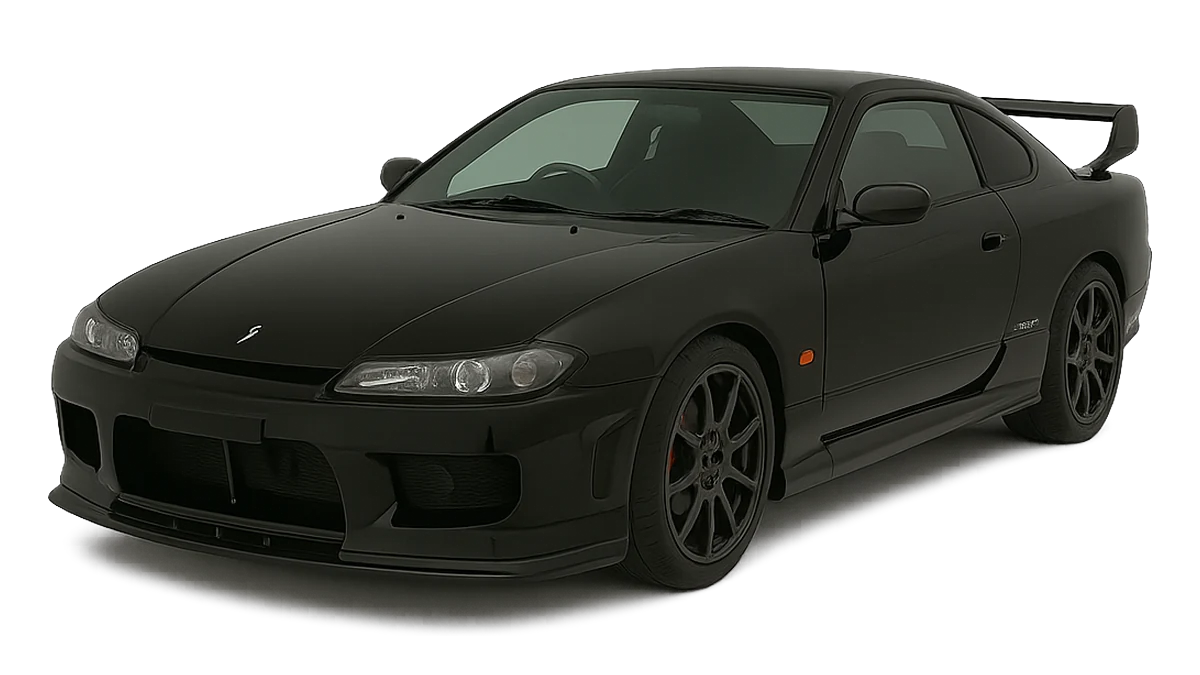
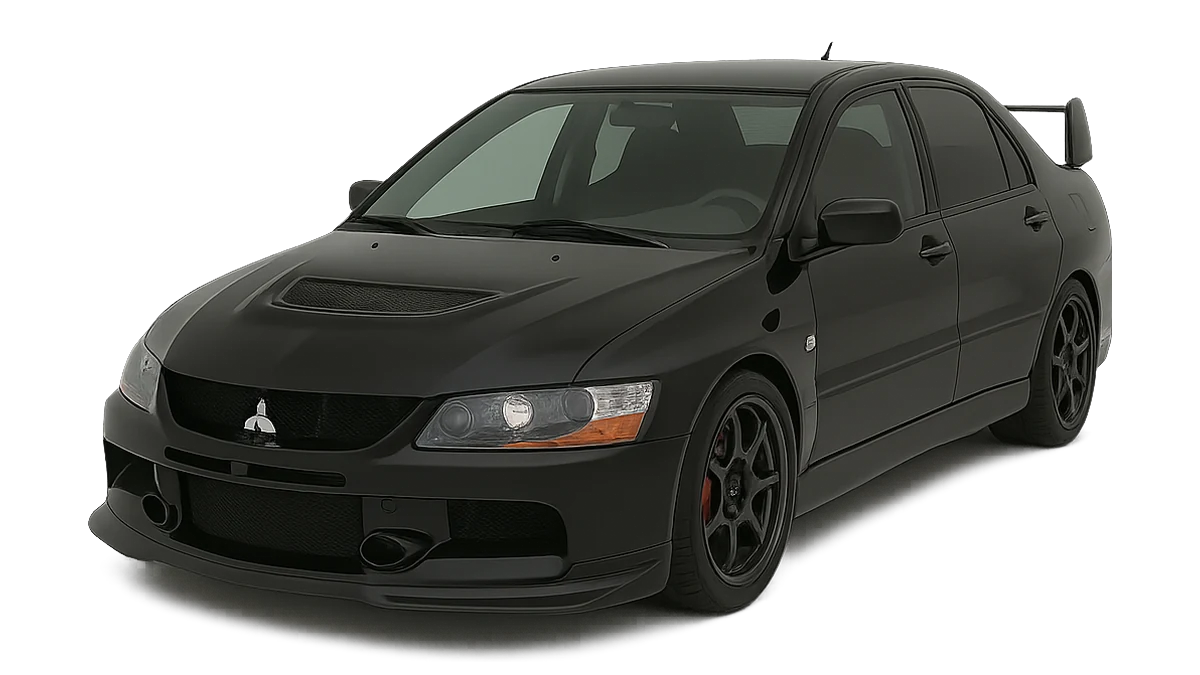
An inline-4 sound is thin and buzzy compared with bigger engines because it fires only twice per revolution, so its pulses are widely spaced, and an uncancelled vibration adds a coarse edge. Turbocharged fours like the Mitsubishi Lancer Evolution and Nissan Silvia are known less for their exhaust tone than for the whooshes, flutters and pops of their turbo hardware.
A four-stroke engine fires half its cylinders per revolution, so an inline-four fires twice per turn, every 180 degrees. The firing frequency is rpm / 60 × 2: 233 Hz at 7,000 rpm, about half of a V8's 467 Hz at the same speed. The firing frequency shown on each car page uses the same formula.
With so few pulses per revolution there are long gaps between them, so a four sounds sparse rather than dense. High-revving fours make up for it with rpm. Honda's S2000, which revs to around 9,000 rpm, reaches 300 Hz, and that is where a four starts to sound genuinely exciting.
Most inline-fours fire in the order 1-3-4-2 on a flat crank. Pistons 1 and 4 move together, as do 2 and 3, which cancels the primary forces but leaves a secondary vibration at twice crank speed. That shake falls on the same frequency as the firing pulses and adds to the buzzy, coarse character. Larger fours, including Mitsubishi's 4G63, use balance shafts to calm it.
Exhaust layout changes the tone a lot. A 4-2-1 header pairs cylinders 1 and 4 and cylinders 2 and 3, so the pulses in each pair are evenly spaced; a 4-1 header merges all four at once and tends to sound harder at high rpm.
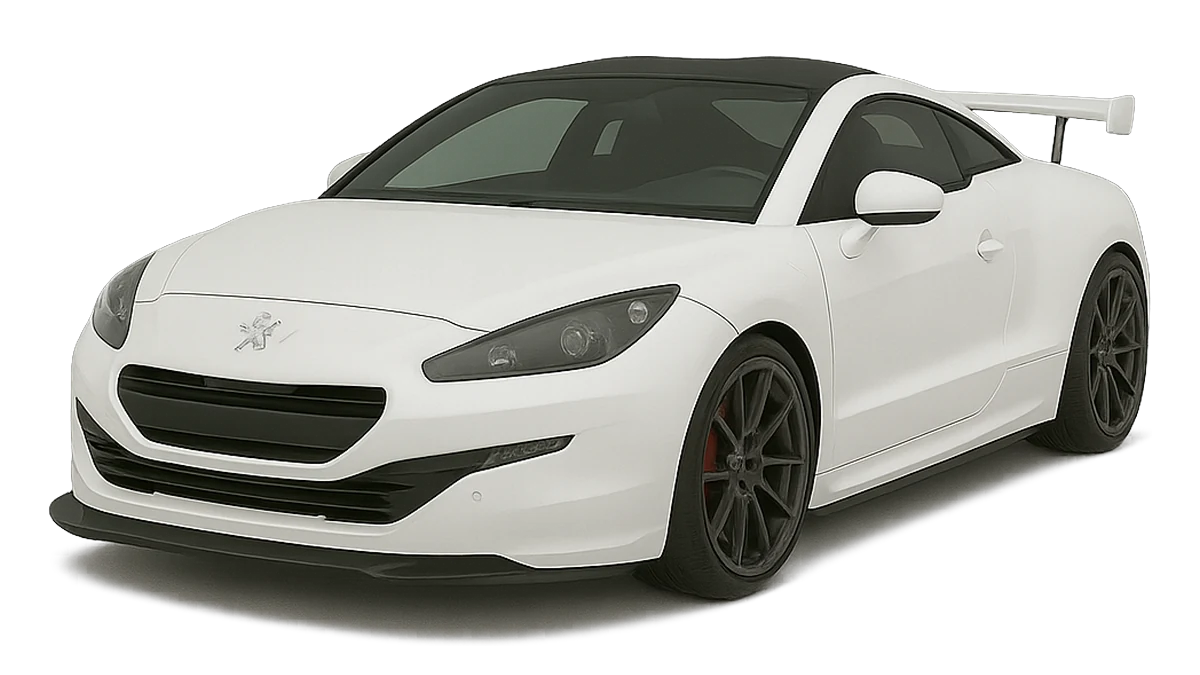
The Lancer Evolution IX's 2.0-liter 4G63, the Silvia S15's 2.0-liter SR20DET and the Peugeot RCZ R's 1.6-liter all use a turbocharger. The turbine sits in the exhaust and absorbs pulse energy, so the exhaust note is muffled, and much of what you hear comes from the intake: the compressor whistle, the hiss of boost and, on modified cars, the flutter or chatter of a blow-off valve.
Rally versions of turbo fours use anti-lag systems that deliberately burn fuel in the exhaust to keep the turbo spinning, producing loud bangs. Road cars do not, but tuned ones are often set up for pops and crackles on overrun.
| Car | Engine | Redline | Hz at redline |
|---|---|---|---|
| Mitsubishi Lancer Evolution IX | 2.0 L, Turbocharged | ≈ 7,000 rpm | ≈ 233 |
| Nissan Silvia S15 | 2.0 L, Turbocharged | 7,500 rpm | 250 |
| Peugeot RCZ R | 1.6 L, Turbocharged | ≈ 6,500 rpm | ≈ 217 |
They fire only twice per revolution, so the pulses are widely spaced, and an inline-four has a secondary vibration at the same frequency that adds a coarse edge.
Not really. A cross-plane V8's burble comes from its uneven per-bank firing and its four pulses per revolution. Exhaust changes can make a four louder or deeper, but not give it that rhythm.
On overrun, some fuel burns in the hot exhaust instead of the cylinder. Some factory and many aftermarket tunes encourage this by adding fuel and retarding ignition timing.
This sound is in the app