
The best sounding V12 engines
The best sounding V12s are naturally aspirated and rev past 8,000 rpm, because a V12 fires six times per revolution and the higher it spins, the denser and higher its tone becomes. Our ranking is opinion, but each pick is justified by what you can actually hear, and the three V12s in the Car Sounds app have recordings you can play below.
Updated 2026-10-19
Why V12s sound the way they do
A four-stroke engine fires half its cylinders per revolution, so a V12 fires every 60 degrees. Its firing frequency is rpm / 60 × 6, which reaches 890 Hz at 8,900 rpm. A V12 is two inline-sixes on one crank, so it is perfectly balanced and each bank's exhaust receives evenly spaced pulses. The power strokes overlap, and the result is one continuous tone instead of individual beats.
That smoothness is a double-edged sword. With nothing irregular in the sound, a V12's character comes from rpm, intake and exhaust design. That is why two V12s of similar size can sound very different, and why turbocharged V12s, whose turbines smooth the pulses even further, rarely make lists like this one.
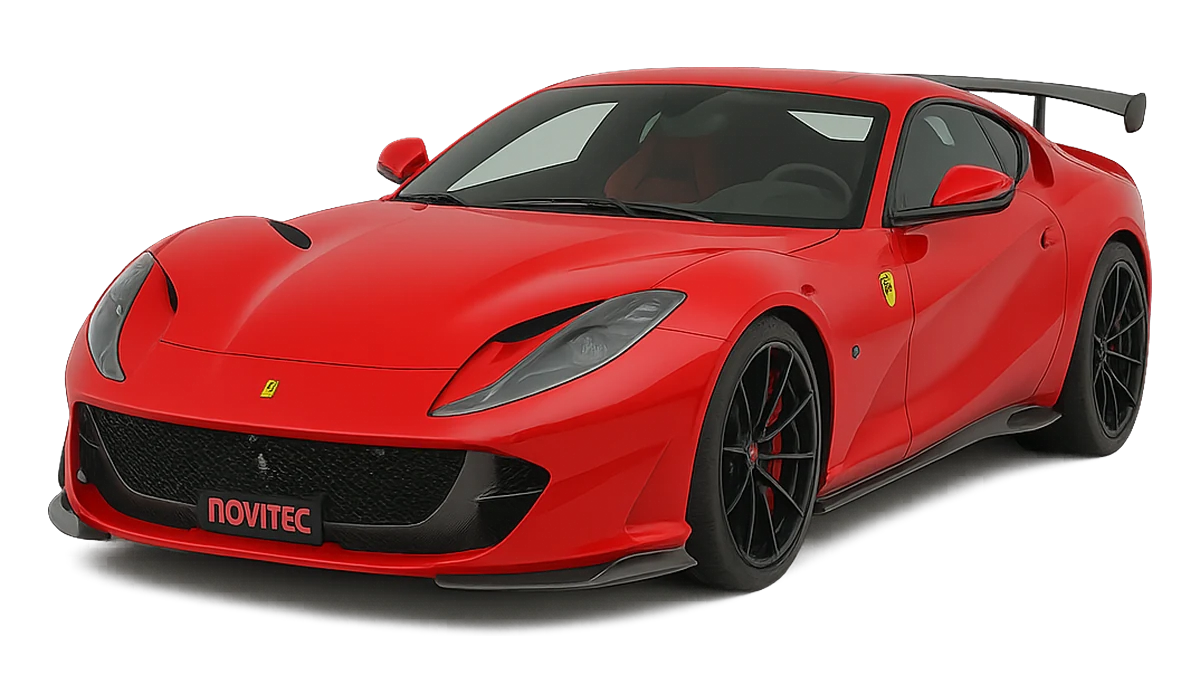
1. Ferrari 812 Superfast
The 812's naturally aspirated 6.5-liter V12 makes 789 hp and revs to 8,900 rpm. Ferrari's tuning emphasizes the top end: the note sharpens and rises all the way to the limiter instead of flattening out. The car in the app has a Novitec exhaust, which adds volume and an extra layer of rasp to an already loud engine. For pure high-rpm scream among the cars here, nothing beats it.
In the recordings, compare the idle with the top end. At idle the 812 fires about 100 times per second and sounds like a smooth hum; near the limiter it fires close to 900 times per second, and that is where the shriek comes from.
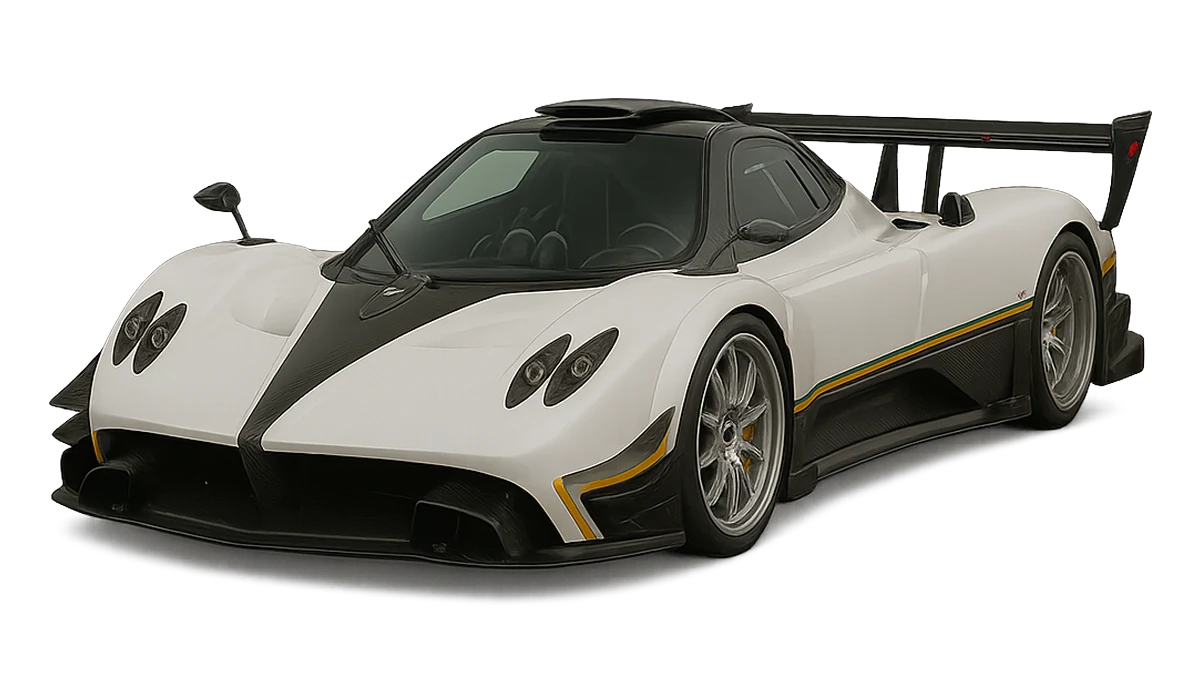
2. Pagani Zonda R
The Zonda R is a track-only car built around a 6.0-liter Mercedes-AMG V12 with a racing exhaust and very little silencing. Its tone is lower and rawer than the Ferrari's, with more bass at mid rpm and a hard, metallic edge as it climbs. It sounds like what it is: a race car with a V12, not a grand tourer with a loud exhaust. Being track-only, it does not have to meet road-car noise regulations, which is a big part of why it sounds so unfiltered.
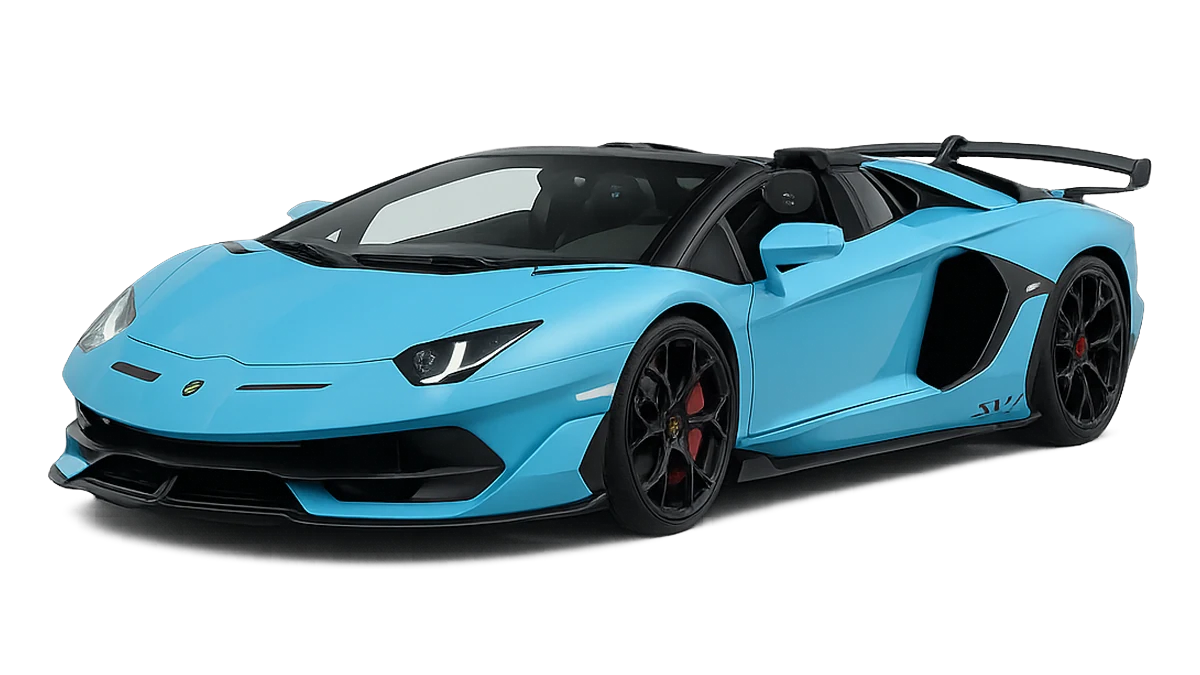
3. Lamborghini Aventador SVJ
The SVJ's 6.5-liter V12 makes 759 hp and revs to about 8,700 rpm. Compared with the Ferrari it sounds harder and more mechanical, with more intake and valvetrain noise. Its single-clutch automated manual is part of the experience: every full-throttle upshift brings a brief pause and a bark as the engine picks up the next gear, something dual-clutch V12s do not do.
Legends outside the app
The McLaren F1's 6.1-liter BMW V12 is still a reference point: naturally aspirated, high-revving and paired with a straight-through exhaust. The Cosworth V12s in the Aston Martin Valkyrie and Gordon Murray T.50 go much further, revving past 11,000 rpm, which puts their firing frequency well above 1,000 Hz and makes them sound closer to a 1990s Formula 1 car than any road car before them.
Ferrari and Lamborghini have kept the naturally aspirated V12 alive into the hybrid era. The Ferrari 12Cilindri and the plug-in hybrid Lamborghini Revuelto both rev to 9,500 rpm, higher than any V12 in our list above.
What makes one V12 sound better than another
Since every even-firing V12 fires at the same rate for a given rpm, the differences come from four things. Redline sets the peak pitch. Exhaust design decides how much rasp and volume reach your ears; aftermarket systems like the Novitec on the 812 make a big difference. Intake layout decides how much induction howl you hear, especially in mid-engined cars where the intake sits right behind your head. And the gearbox decides how shifts sound: a dual-clutch keeps the note almost continuous, while a single-clutch or manual adds a dip and a bark between gears.
Displacement matters less than people think. Small cylinders, around 540 cc each in a 6.5-liter V12, are part of why these engines can rev so high, and rpm is what really drives the sound.
Frequently asked questions
What is the best sounding V12?
It is a matter of taste. The Ferrari 812 Superfast, Pagani Zonda R and McLaren F1 are common answers; newer Cosworth V12s rev even higher but are extremely rare.
Why do Ferrari V12s sound so good?
They are naturally aspirated, perfectly balanced and rev to around 9,000 rpm or more, so the six firings per revolution blend into a dense, high tone that keeps rising to the limiter.
Do turbo V12s sound as good?
Usually not. The turbines absorb pulse energy and smooth the sound, so twin-turbo V12s tend to sound quiet and refined rather than dramatic.