
V12
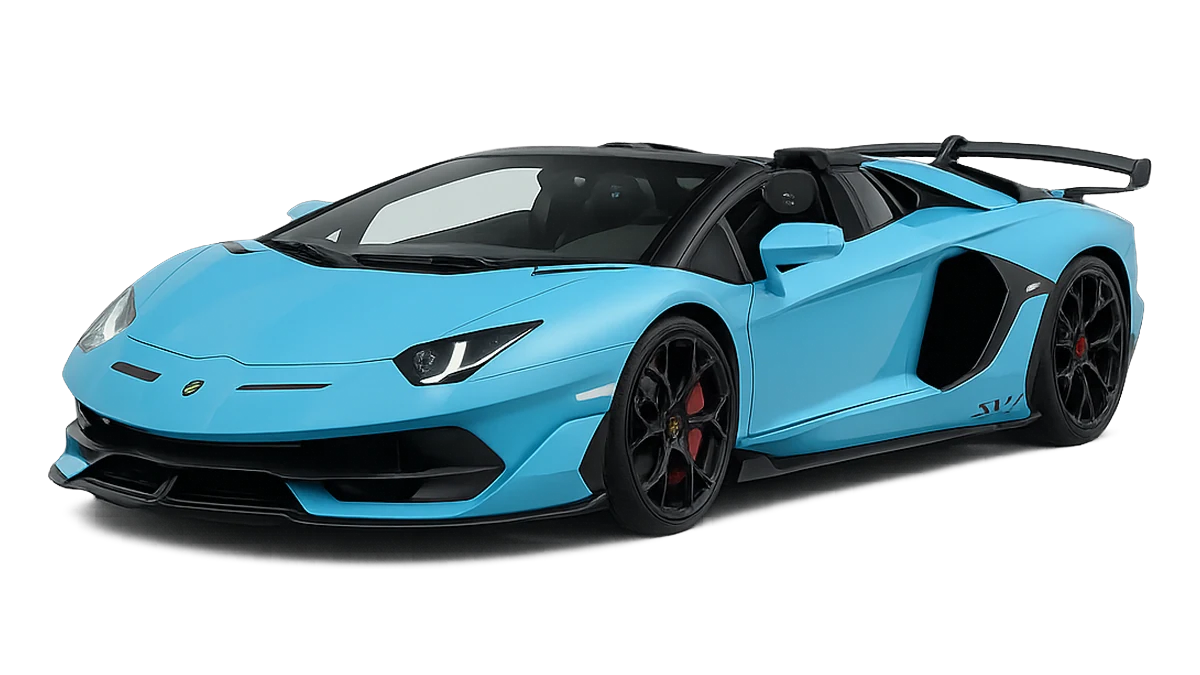
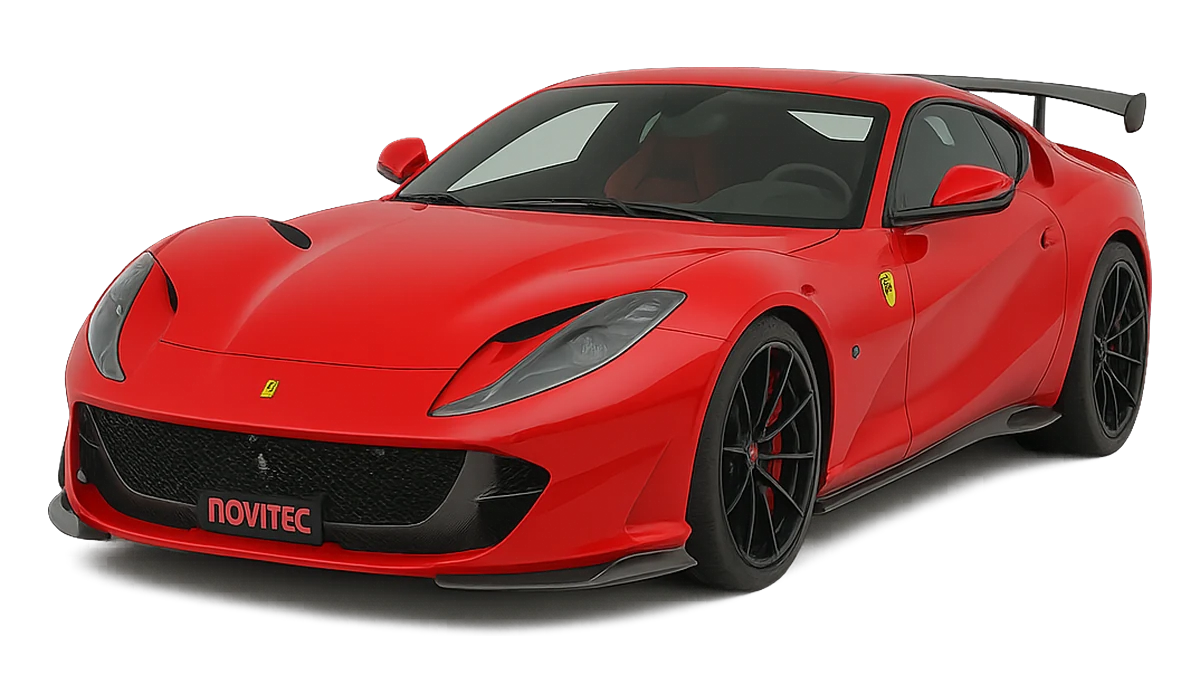
A V12 engine sound is the smoothest and highest-pitched of the common piston layouts because it fires six times per revolution, every 60 degrees, so the power pulses blend into one continuous tone. At 8,000 rpm and beyond, in cars like the Ferrari 812 Superfast or Lamborghini Aventador SVJ, that tone becomes a sustained, piercing howl.
A four-stroke engine fires half its cylinders on each crank revolution, so a V12 fires six times per turn. The firing frequency is rpm / 60 × 6: about 100 Hz at a 1,000 rpm idle and 890 Hz at the 812 Superfast's 8,900 rpm limit. A V8 would have to spin to over 13,000 rpm to match that. The firing frequency shown on each car page uses the same formula.
Because the power strokes overlap, the pressure in the exhaust never drops far between pulses. Your ear hears a dense, steady tone instead of separate beats, which is why even a V12 idle sounds like a hum rather than a thump.
A V12 is two inline-six engines on a shared crank. An inline-six is already perfectly balanced, so a V12 has no primary or secondary shaking forces to fight, whatever its bank angle. Each bank fires every 120 degrees, the banks alternate, and each bank's exhaust receives an evenly spaced train of pulses. There is no uneven rhythm to produce a burble.
The cylinders are also small. A 6.5-liter V12 has about 540 cc per cylinder, so each individual pulse is less violent than in a big V8. Small cylinders, light pistons and perfect balance let these engines rev very high, which keeps pushing the pitch up.
The Ferrari 812 Superfast's naturally aspirated 6.5-liter V12 makes 789 hp and revs to 8,900 rpm; the car in the app wears an aftermarket Novitec exhaust that adds volume and rasp. The Lamborghini Aventador SVJ's 6.5-liter V12 makes 759 hp and has a harder, more mechanical edge, and its single-clutch gearbox gives a distinct bark on every upshift.
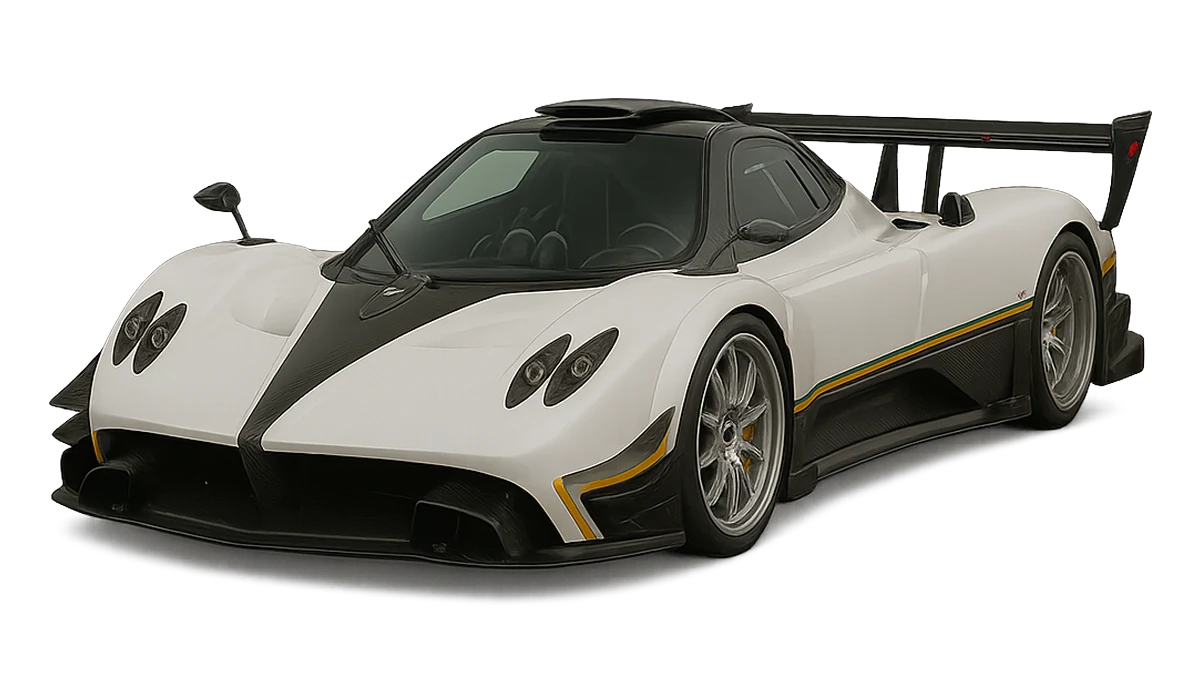
The Pagani Zonda R, a track-only car, uses a 6.0-liter Mercedes-AMG V12 with a racing exhaust and very little silencing. Its tone sits lower and rawer than the Ferrari's, closer to a race car than a grand tourer.
Twin-turbo V12s, used by Aston Martin, Rolls-Royce and Mercedes-AMG, are much quieter because the turbines absorb exhaust energy and smooth the pulses. The vocal V12s are naturally aspirated. Ferrari and Lamborghini have kept that alive, with the 12Cilindri and the hybrid Revuelto both revving to 9,500 rpm, while the Cosworth V12s in the Aston Martin Valkyrie and Gordon Murray T.50 go past 11,000 rpm.
| Car | Engine | Redline | Hz at redline |
|---|---|---|---|
| Ferrari 812 Superfast (Novitec) | 6.5 L, Naturally aspirated | 8,900 rpm | 890 |
| Lamborghini Aventador SVJ | 6.5 L, Naturally aspirated | 8,700 rpm | 870 |
| Pagani Zonda R | 6.0 L, Naturally aspirated | ≈ 7,500 rpm | ≈ 750 |
Six evenly spaced firings per revolution blend into one smooth, continuous tone, and perfect balance lets the engine rev very high. The result is a clean, high-pitched note with no roughness.
That is opinion. Naturally aspirated, high-revving V12s such as the Ferrari 812 Superfast, the Pagani Zonda R and the Lamborghini Aventador SVJ are the usual favorites, each with a different character.
Not necessarily. A V8 often has more bass and punch at low rpm, while a V12 sounds higher and smoother. Loudness depends mostly on the exhaust.
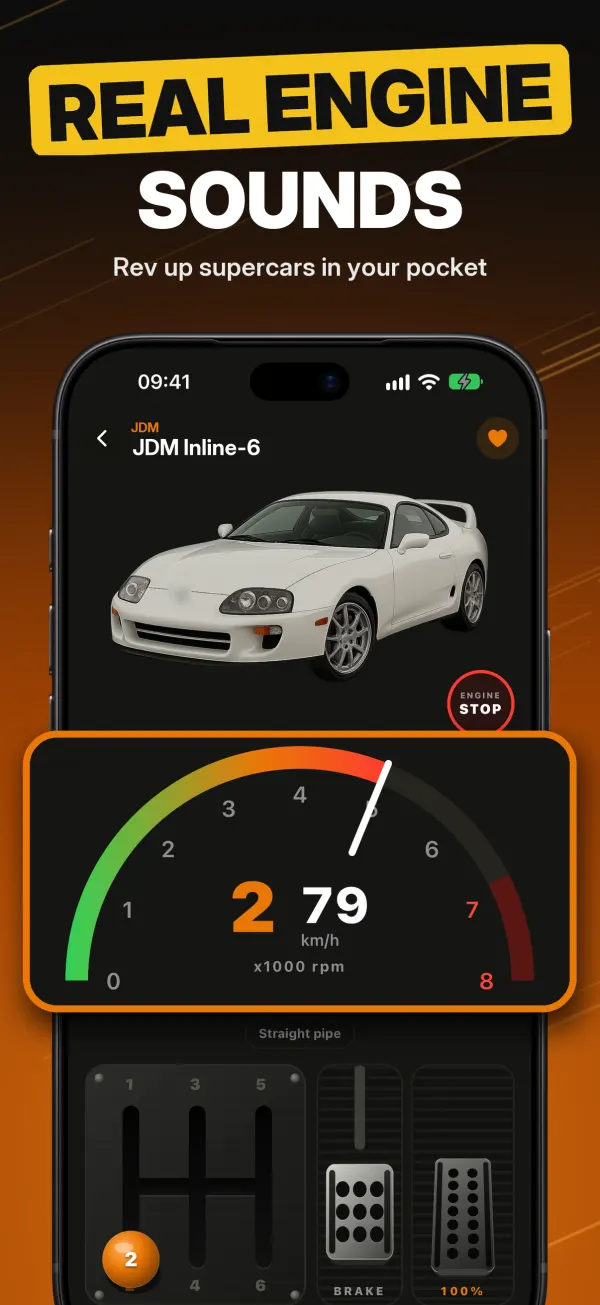
This sound is in the app