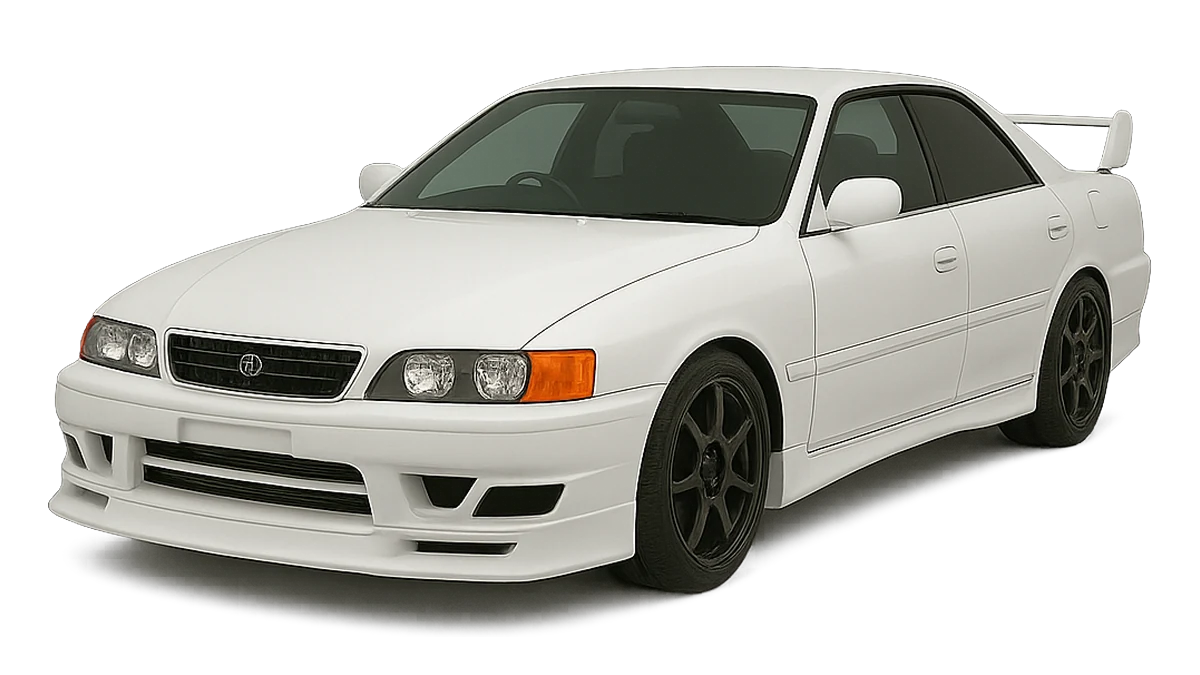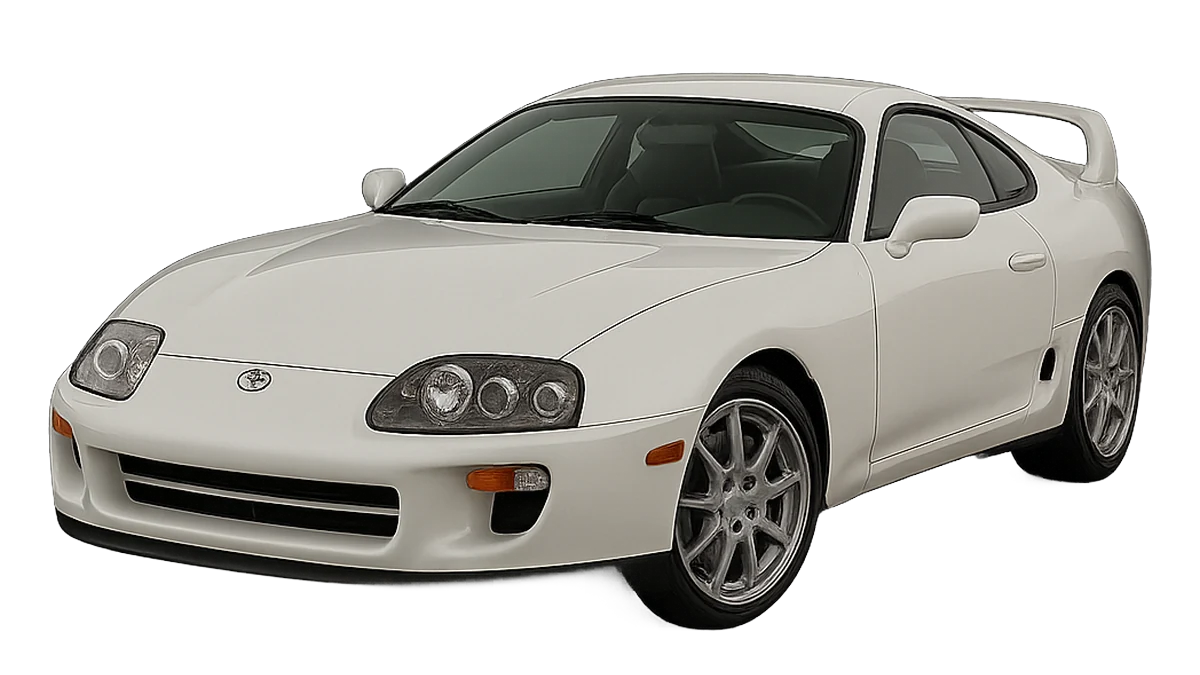

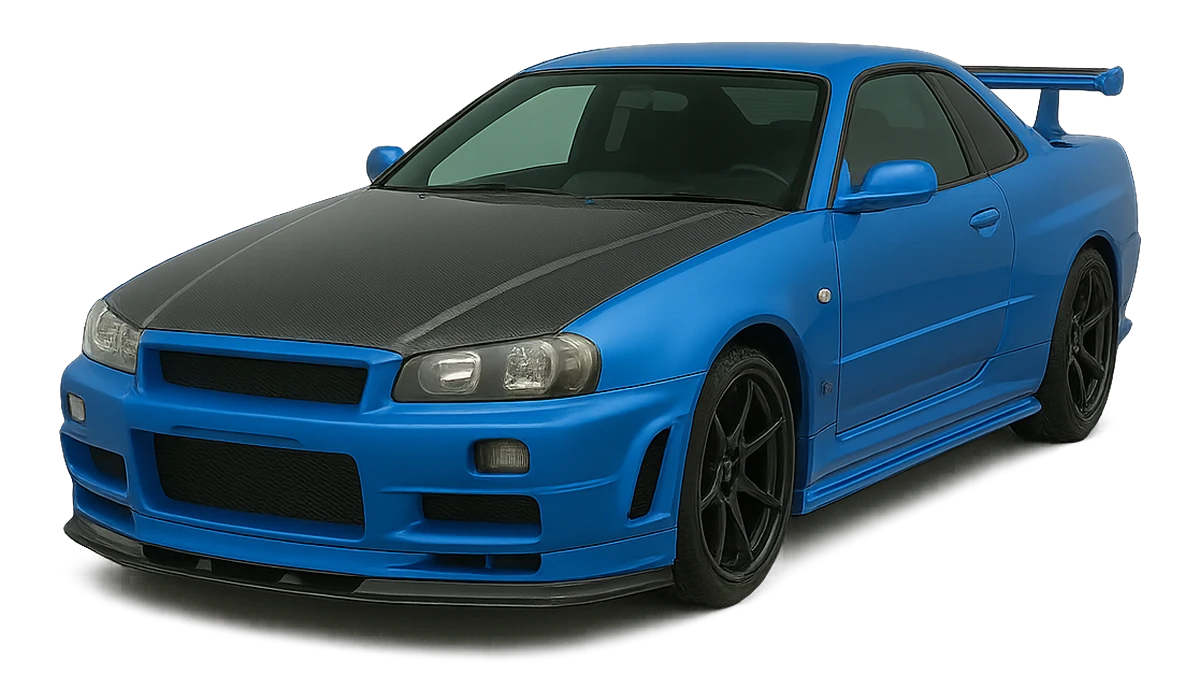
Inline-6 · twin-turbo
An inline-6 sound is smooth, even and silky, with a turbine-like rise in turbocharged versions, because six cylinders in a row are perfectly balanced and fire at exactly even 120-degree intervals. Toyota's 2JZ and 1JZ, Nissan's RB26 and BMW's straight-sixes are the reference points.
An inline-six is one of the few engines with perfect primary and secondary balance, so it has almost no inherent shake. A four-stroke engine fires half its cylinders per revolution, so a six fires three times per turn, every 120 degrees, usually in the order 1-5-3-6-2-4. The firing frequency is rpm / 60 × 3, or 340 Hz at 6,800 rpm; the firing frequency shown on each car page uses the same formula.
With no vibration to color the sound and perfectly regular pulses, the note is clean and continuous. It has less bass than a V8 and less shriek than a V12, but it is hard to beat for smoothness.
Most straight-sixes group their exhaust runners into cylinders 1-2-3 and 4-5-6. The 1-5-3-6-2-4 firing order alternates between the front and rear groups, so each group receives a pulse every 240 degrees, evenly spaced and without overlap. That helps scavenging and keeps the tone even, and it suits twin-turbo setups: on the RB26, the front three cylinders feed one turbo and the rear three feed the other.
When the two groups merge into one pipe, the pulses interleave into a perfectly regular stream, which is why a straight-piped six sounds so smooth even when it is very loud.
The Toyota Supra MK4's 3.0-liter 2JZ-GTE uses sequential twin turbos, the Nissan Skyline GT-R R34's 2.6-liter RB26DETT uses parallel twin turbos and individual throttle bodies, and the Toyota Chaser JZX100's 2.5-liter 1JZ-GTE uses a single turbo. Turbos damp the exhaust pulses, so much of the character comes from the intake side: spool hiss, the compressor whistle and, on modified cars, blow-off valve chatter.
The RB26 is smaller and revs to around 8,000 rpm, giving it a sharper, higher top end. The 2JZ has a bigger displacement and a deeper, fuller note. Tuned versions of all three are often heard with very free-flowing exhausts, which bring back the raw six-cylinder howl.
Without a turbo in the way, a straight-six turns from silky to metallic as it climbs. BMW's naturally aspirated M engines, like the E46 M3's 3.2-liter, which revs to about 8,000 rpm, are the best-known examples of that rising, rasping howl.
| Car | Engine | Redline | Hz at redline |
|---|---|---|---|
| Nissan Skyline GT-R R34 | 2.6 L, Twin-turbo | 8,000 rpm | 400 |
| Toyota Chaser JZX100 | 2.5 L, Turbocharged | ≈ 7,000 rpm | ≈ 350 |
| Toyota Supra MK4 | 3.0 L, Twin-turbo | 6,800 rpm | 340 |
They are perfectly balanced and fire every 120 degrees, and their exhaust is usually split so each half gets evenly spaced pulses. Nothing in the sound is irregular.
Yes. The 2.6-liter RB26 revs higher and has individual throttle bodies, so it sounds sharper at the top. The 3.0-liter 2JZ sounds deeper and fuller.
They have the same firing frequency at a given rpm, but an inline-six is smoother because of its balance and exhaust grouping. A V6 usually sounds raspier.
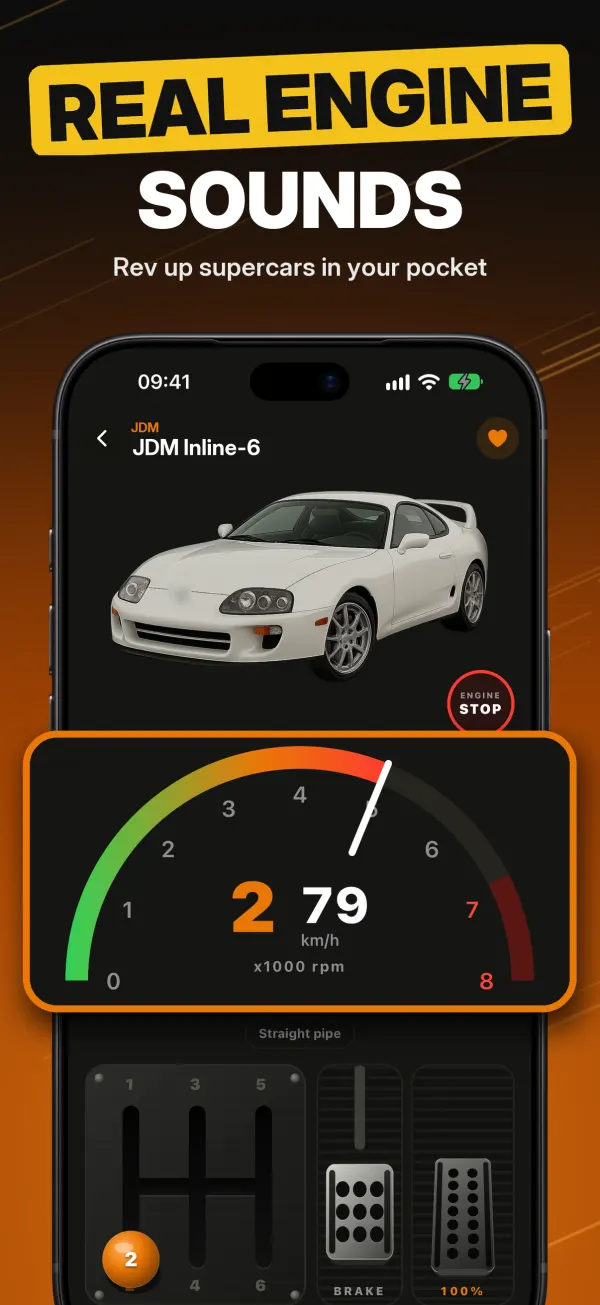
This sound is in the app