
Boxer-4 · turbocharged
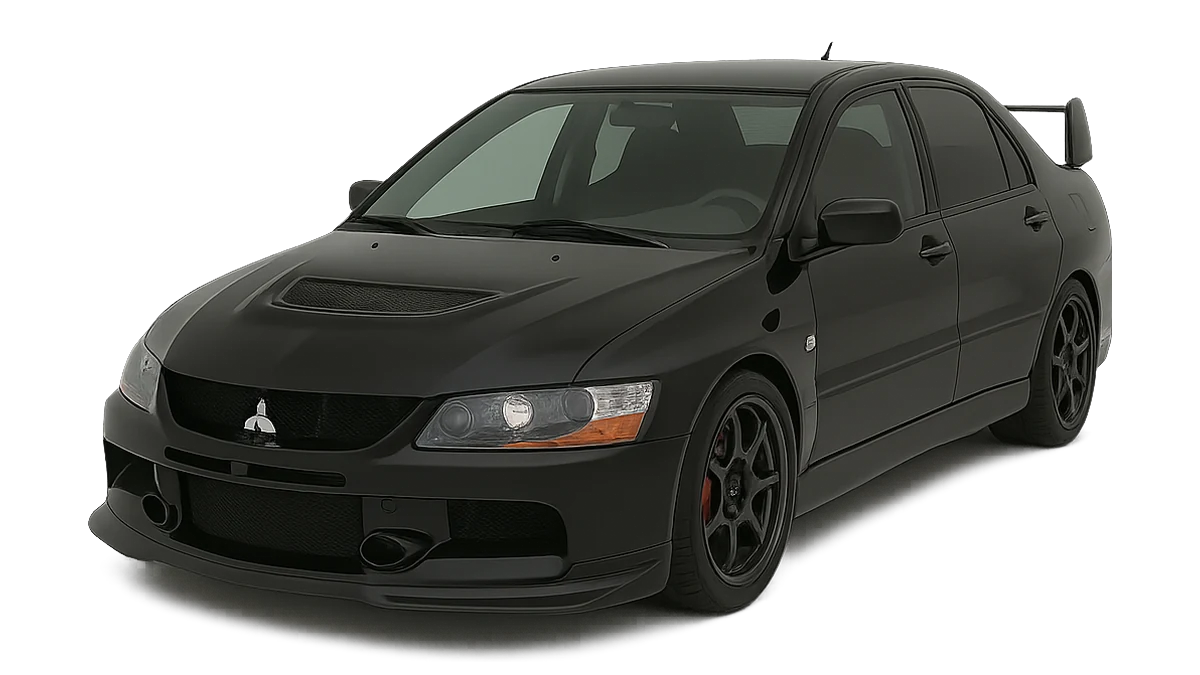
4 more Mitsubishi Lancer Evolution IX sounds and Drive mode are in the free app.
Unlock all sounds freeThe Mitsubishi Lancer Evolution IX sounds gruff and busy at idle and turns into a hard, buzzy growl with plenty of turbo whoosh under load, because its 4G63T is a 2.0-liter turbocharged inline-4 tuned for strong mid-range boost. Most of its character comes from the turbo and intake rather than the exhaust, which is why modified Evos with louder exhausts and blow-off valves sound so different from stock ones.
A four-stroke inline-4 fires twice per crank revolution, so the firing frequency shown above is lower than that of a six or eight at the same rpm. Each pulse is spaced 180 degrees apart, and with only four of them per two revolutions the note has a coarse, slightly flat texture rather than a smooth hum.
The 4G63 also uses balance shafts to cancel the second-order vibration that four-cylinder engines naturally produce. That keeps the engine from feeling harsh, but it does not change the basic gruff, four-cylinder character of the sound.
The Evolution IX was the last Evo to use the 4G63, and it added MIVEC variable valve timing on the intake side. US cars were rated at 286 hp, while Japanese-market cars carried the 280 PS figure Japanese makers held to at the time.
The single turbocharger takes energy out of the exhaust pulses and quietens the tailpipe, so a stock Evo IX is not especially loud. What stands out instead is induction sound: air rushing into the intake, a rising whistle as boost builds, and a soft release when you lift off the throttle.
The Evo has a big tuning following, and many cars run larger turbos, wider downpipes, straight-through exhausts and atmospheric blow-off valves. Those changes bring a loud, raspy note, crackles on the overrun and a sharp hiss between gears. Recordings of these cars are often of modified examples, so what you hear may differ from a factory car.
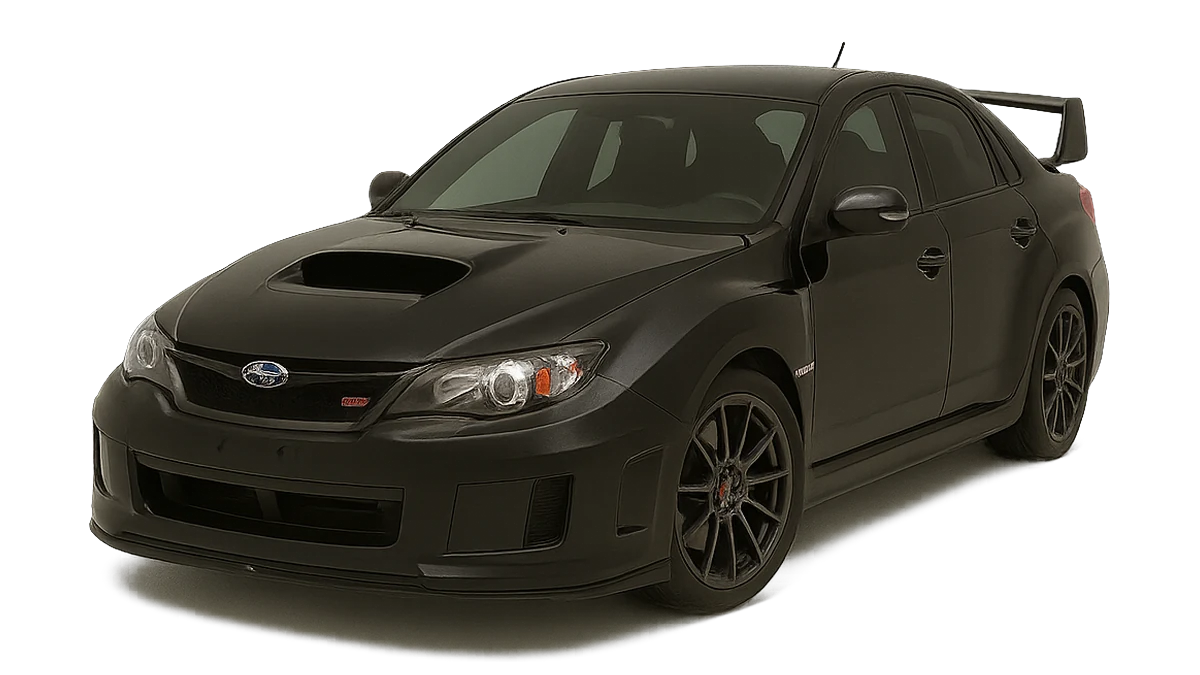
Its natural rival, the Subaru Impreza WRX STI, sounds very different despite having the same basic recipe of turbocharged four-cylinder power and all-wheel drive. The Subaru's boxer engine and unequal-length headers produce a lumpy rumble, while the Evo's inline-4 is smoother and more even.
The Lancer Evolution IX uses the 4G63T, a 2.0-liter turbocharged inline-4 with MIVEC variable intake valve timing. It was the final Evo generation to use the 4G63 before the Evo X switched to the 4B11T.
The Evo uses an inline-4 with evenly spaced exhaust pulses, while the STI uses a boxer engine with unequal-length headers. That gives the Subaru its uneven rumble and the Evo a smoother, buzzier note.
Not very. The turbo and factory exhaust keep it fairly quiet, with most of the noise coming from the intake and turbo. Loud Evos usually have aftermarket exhausts and blow-off valves.
This sound is in the app