
Inline-6 · turbocharged
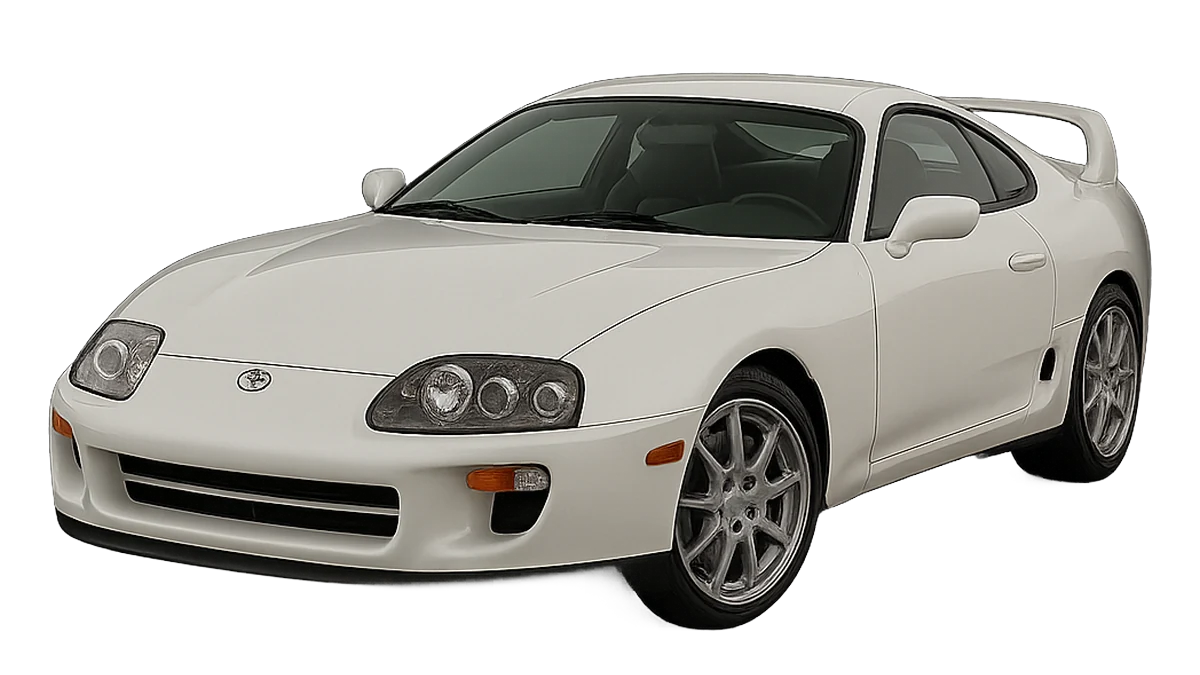
The Toyota Supra MK4 sounds smooth and even at idle and builds to a clean, rising howl toward its 6,800 rpm redline, because its 2JZ-GTE is a perfectly balanced 3.0-liter inline-6 that fires a cylinder every 120 degrees of crank rotation. In stock form the two turbochargers soften the exhaust note, so the loud, raw Supra sound most people know from videos usually comes from modified cars.
An inline-6 is naturally balanced: the forces from the front three cylinders cancel those of the rear three, so the engine does not shake or pulse the way a four-cylinder or a cross-plane V8 does. The 2JZ fires in the classic 1-5-3-6-2-4 order, alternating between the front and rear halves of the engine, and the pulses arrive at perfectly even intervals.
Even pulses blend into a steady tone rather than a lumpy beat. That is why a Supra at idle has a hum instead of a burble, and why the note gets cleaner and more tuneful as rpm rises instead of rougher. The firing frequency shown above climbs smoothly with engine speed, and you can hear the pitch follow it.
The Supra Turbo uses two turbochargers in sequence: at low rpm the exhaust drives one turbo, and the second joins in the mid-range for stronger top-end boost. Every turbine takes energy out of the exhaust pulses before they reach the tailpipe, so the turbos act as a first stage of silencing. A factory Supra is noticeably more refined than its reputation.
What you gain instead is induction sound: a soft rush of air under load and a faint whistle as boost builds. US-market Turbo cars were rated at 320 hp, while Japanese-market cars carried the 280 PS figure that domestic makers held to at the time.
The 2JZ-GTE is famous for tolerating far more boost than it left the factory with, so a large share of surviving Supras are modified. Common changes such as a big single-turbo conversion, a wide straight-through exhaust and a removed catalytic converter make the car much louder and raspier, add a pronounced turbo spool whistle, and often bring an audible blow-off valve. JDM recordings are frequently of cars like this, so what you hear may differ from a showroom-stock example.
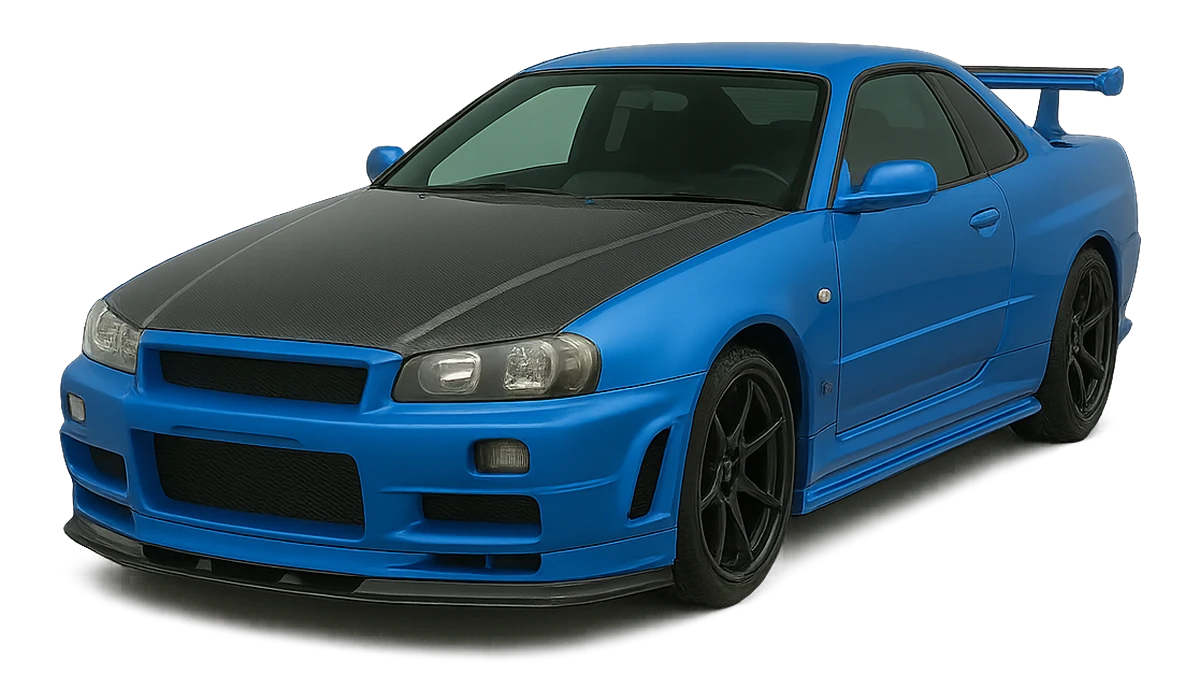
Compared with the Nissan Skyline GT-R's RB26, the larger 2JZ has a fuller, deeper character, while the smaller-displacement RB26 tends to sound sharper and raspier at the top end.
The Supra Turbo uses the 2JZ-GTE, a 3.0-liter inline-6 with sequential twin turbochargers. Non-turbo MK4 Supras used the naturally aspirated 2JZ-GE, which shares the smooth inline-6 character without the turbo noises.
Not especially. The factory exhaust and the two turbos keep a stock car fairly quiet and refined. The very loud Supras in online videos are usually modified with larger turbos and freer-flowing exhausts.
A cat-back exhaust is the usual first step and keeps the catalytic converters in place. Larger turbo conversions change the sound further, but check your state's emissions and noise rules before modifying.
This sound is in the app