
V8 · supercharged
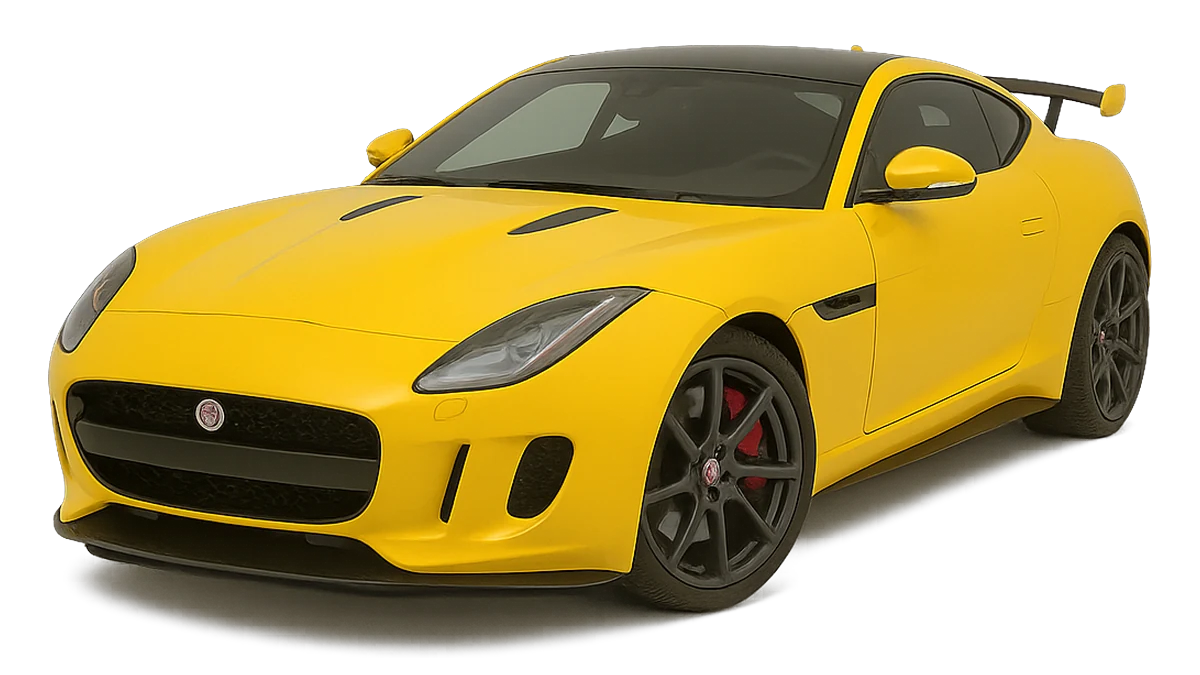
The Jaguar F-Type V8 sounds loud, deep and deliberately theatrical because its 5.0-liter supercharged V8 feeds an active exhaust that Jaguar tuned to crackle and bang on the overrun. Under load you get a hard-edged cross-plane V8 bark with only a faint supercharger whine underneath, and lifting off sets off the pops the car is known for.
The engine is Jaguar's AJ133, a 90-degree V8 with a cross-plane crankshaft and a Roots-type supercharger sitting in the valley between the cylinder banks. The cross-plane crank produces uneven bank-to-bank exhaust pulses, which give the classic V8 rumble at low rpm. Because the supercharger is driven by the crankshaft rather than by exhaust gas, nothing sits in the exhaust stream to soak up those pulses the way a turbocharger does, so the note stays sharp and immediate.
Output ranged from 450 to 575 PS depending on the version, from the original V8 S and R through the SVR to the later P450 and P575 R, but the basic recipe stayed the same: a big bark at full throttle and a busy, crackling overrun.
The V8 F-Type's active exhaust has valves that open with a button on the center console or in the sportier drive mode. With the valves open, the engine calibration adds crackles and bangs on lift-off and between gears, which come from small amounts of unburned fuel igniting in the hot exhaust. Jaguar engineered that behavior on purpose, and it became one of the car's selling points. With the valves closed, the car is noticeably quieter at a steady cruise.
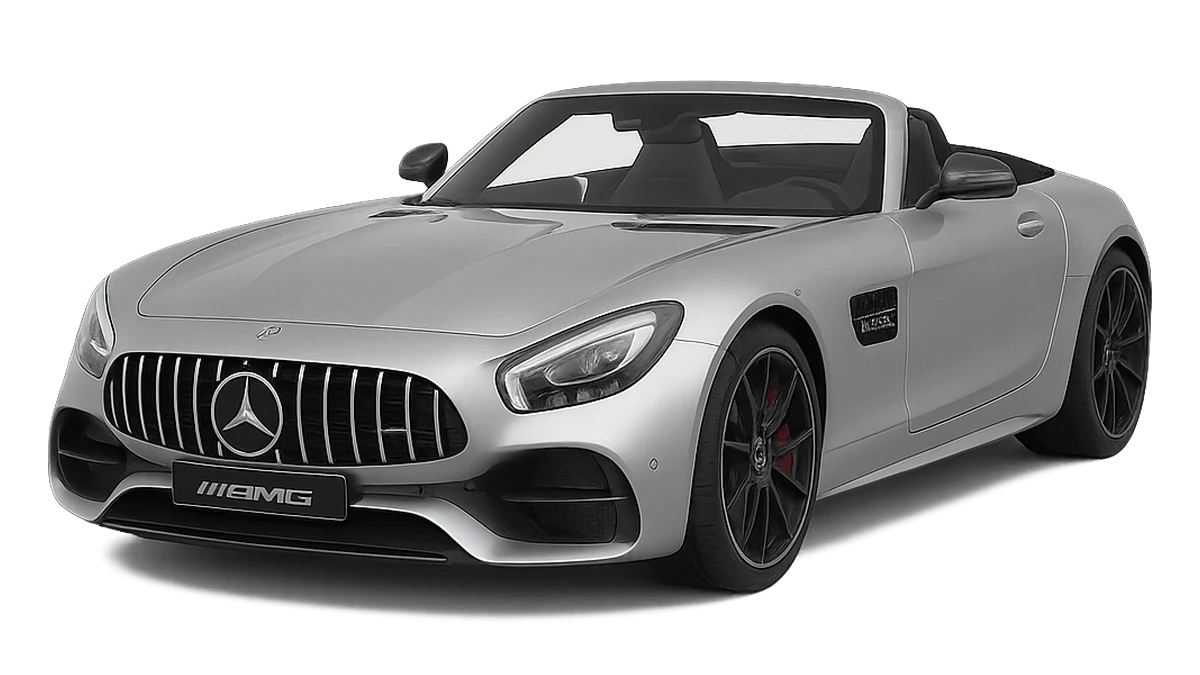
The supercharger is quieter than you might expect: you can catch a faint whine at part throttle, but the exhaust drowns it out once the valves open. Compared with twin-turbo V8 rivals such as the Mercedes-AMG GT, the F-Type's high-rpm note is rawer, while the turbocharged cars tend to sound thicker and more muffled at the top end. The supercharged V6 F-Type has its own rasp, but the V8 is lower, louder and closer to a traditional muscle-car rumble.
With the active exhaust valves open, the engine's calibration lets small amounts of unburned fuel ignite in the hot exhaust when you lift off or change gear. Jaguar tuned this in deliberately.
Supercharged. The 5.0-liter AJ133 V8 uses a Roots-type supercharger, which is one reason the exhaust note stays sharp: there is no turbine in the exhaust to dampen it.
It comes down to taste. The supercharged 3.0-liter V6 is higher pitched and raspier, while the V8 is deeper and louder, with more of the classic V8 rumble.
This sound is in the app