
V8
4 more Aston Martin V8 Vantage sounds and Drive mode are in the free app.
Unlock all sounds freeThe Aston Martin V8 Vantage sounds deep and lumpy at idle and hard-edged at high rpm because its naturally aspirated 4.7-liter cross-plane V8 revs freely and its exhaust bypass valves open up as the revs rise. This page covers the 2008–2017 car, the generation before today's twin-turbo Vantage. The start, idle, rev and drive clips are recordings in the Car Sounds app.
Aston Martin's V8, known as the AJ37, is a 32-valve, quad-cam engine derived from Jaguar's AJ-V8 design and developed for Aston Martin with dry-sump lubrication. It sits behind the front axle line, and it arrived in the Vantage in 2005 at 4.3 liters before growing to 4.7 liters for 2008. The 4.7 made about 420 hp at first and around 430 hp in later Vantage S form.
It is a cross-plane V8, so each bank fires at uneven intervals and you hear an off-beat burble at idle. With no turbos in the way, every exhaust pulse reaches the tailpipes intact. As it revs toward its roughly 7,300 rpm redline, about 490 pulses per second (the firing frequency shown above), the burble fades into a sharper, more metallic howl than most cross-plane road V8s make.
The Vantage's exhaust uses bypass valves that keep it relatively quiet at low revs and light throttle, then open at higher rpm and load to give the gas a freer path. The change is easy to hear: partway up the rev range the note steps up in volume and gains a raw edge. On later cars, Sport mode opens the valves earlier and sharpens throttle response.
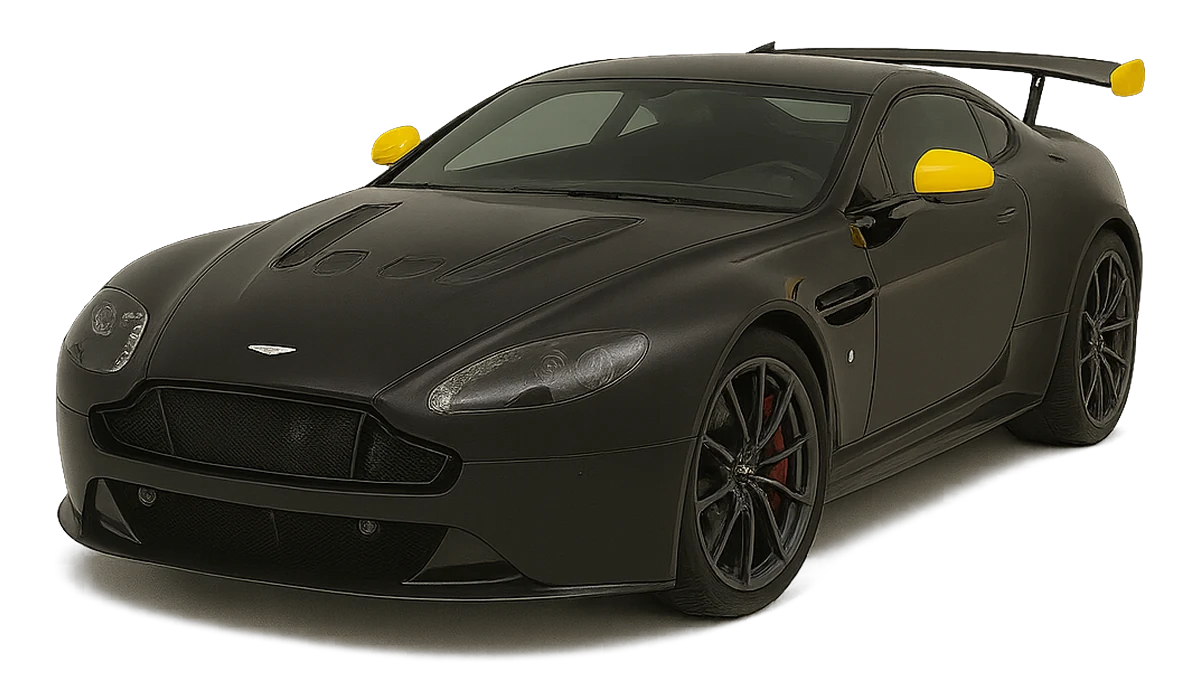
Because the valves change the character so much, holding them open all the time is a popular modification among owners. The car pictured is a track-focused version with a louvred bonnet and a big fixed wing, but the recipe is the same: an unboosted V8 that sounds best near the top of the rev range.
The V12 Vantage puts Aston Martin's 5.9-liter V12 in the same body. Twelve cylinders fire six times per revolution and overlap smoothly, so it sounds more even and higher in pitch, without the V8's lope.
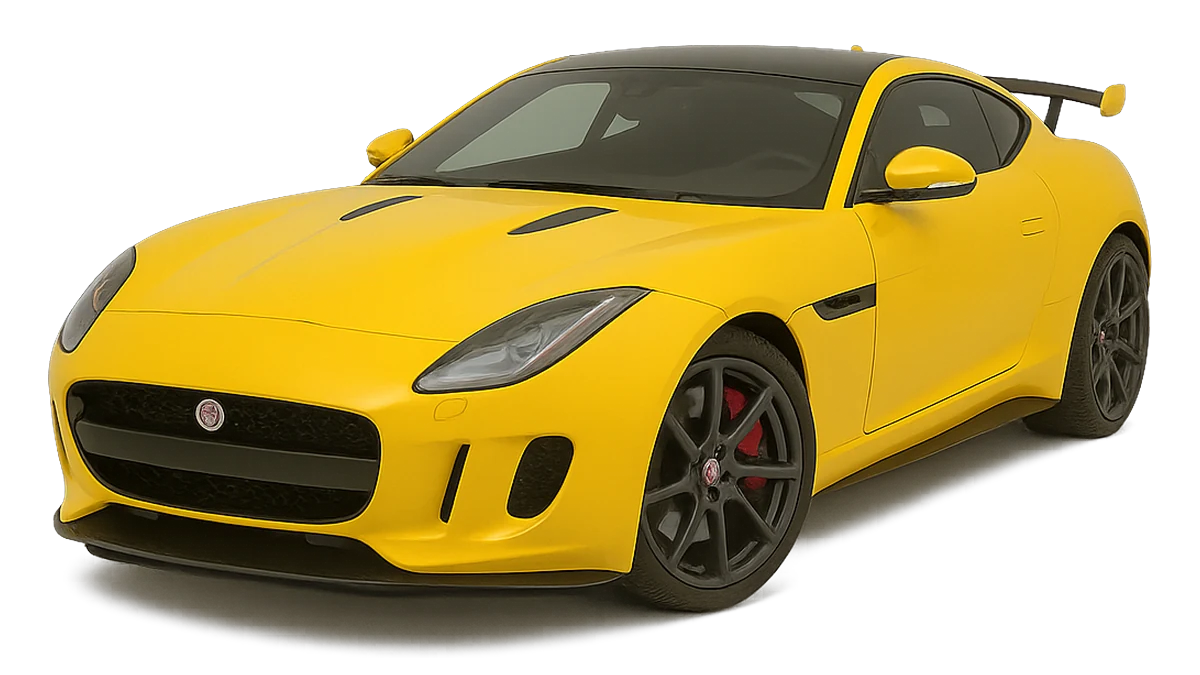
The Vantage launched for 2018 uses a 4.0-liter twin-turbo V8 from Mercedes-AMG. It is also a cross-plane V8, but its turbos sit in the exhaust and absorb pulse energy, so it sounds deeper, boomier and more muffled, relying on its valved exhaust and overrun crackle for drama rather than high revs. If you want the unboosted howl, the older car is the one to hear. The AJ-V8 family it came from also led to the supercharged 5.0-liter V8 in the Jaguar F-Type.
From 2008 it uses a naturally aspirated 4.7-liter V8 with a cross-plane crank, making about 420 to 430 hp depending on version. Cars from 2005 to 2008 used a 4.3-liter version of the same engine.
Its exhaust has bypass valves that stay closed at low rpm to keep it quiet, then open as revs and load rise, giving the exhaust a freer and louder path.
No. The 2018-on Vantage uses a Mercedes-AMG twin-turbo 4.0-liter V8, which sounds deeper and more muted. The older naturally aspirated 4.7 is sharper and revs higher.
This sound is in the app