
Flat-6
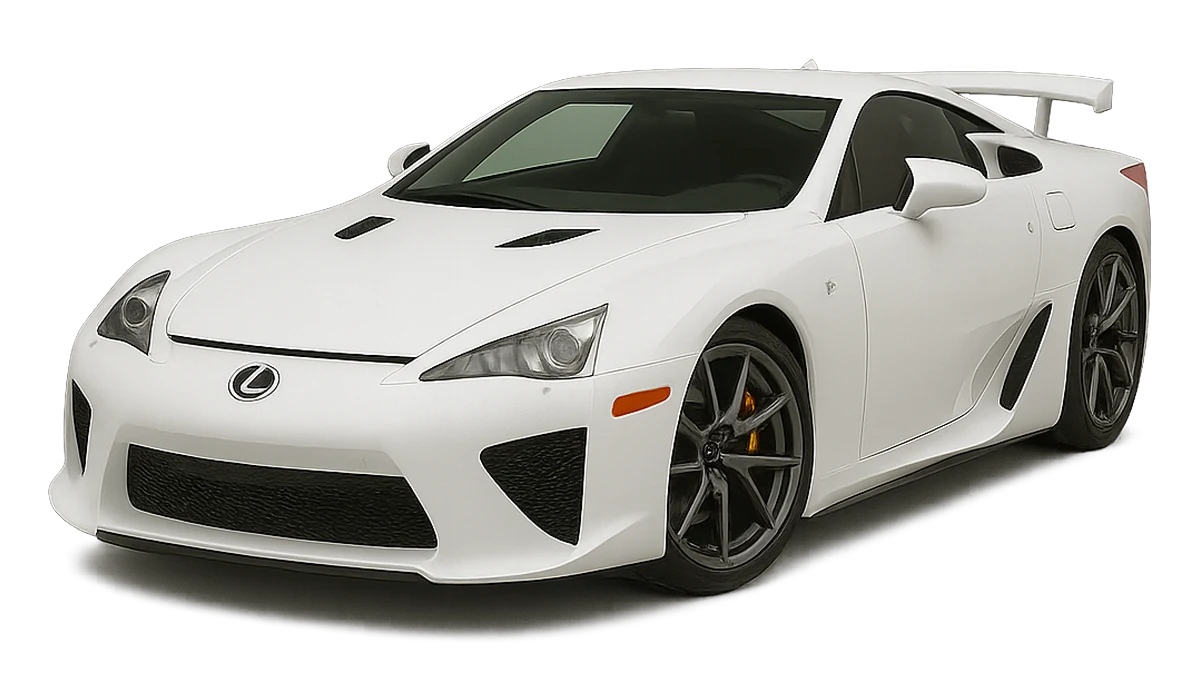
The Lexus LFA sounds like a high, clean wail rather than a growl because its 4.8-liter V10 fires ten evenly spaced pulses every two revolutions and revs to 9,000 rpm with very little rotating mass. The pitch climbs and falls faster than in almost any other road car, and Lexus and Yamaha, which co-developed the engine, tuned the intake and exhaust with sound as a design goal.
The 1LR-GUE is a 72-degree V10. With ten cylinders sharing 720 degrees of crank rotation, a 72-degree bank angle lets every cylinder fire exactly 72 degrees after the last one, so the exhaust pulses arrive at perfectly even intervals. There is no lope or burble like a cross-plane V8, just one continuous tone with a hard, metallic edge from its harmonics.
Cylinder count and rpm together set the pitch. At the 9,000 rpm redline the LFA fires 750 times per second (the firing frequency shown above), compared with 600 for a V8 at the same speed and about 470 for a V8 at a typical 7,000 rpm redline. That higher fundamental is why the LFA reads as a wail at the top end, while most performance engines stay lower and fuller.
The engine was built like a race engine: titanium valves and connecting rods, forged pistons, dry-sump lubrication and ten individual throttle bodies, one per cylinder. Light internals and individual throttles mean the engine responds almost instantly to the pedal.
Lexus quoted about 0.6 seconds for the engine to go from idle to 9,000 rpm, so quick that the car uses a digital tachometer because a mechanical needle could not keep up. In the rev clips this is the most striking thing: each blip snaps up and falls back in a fraction of a second, with none of the lazy decay you hear from heavier engines.
Yamaha co-developed the V10, and the team treated the sound as part of the engineering brief rather than an afterthought. Dedicated channels carry intake sound into the cabin, so from the driver's seat you hear a lot of induction noise layered over the exhaust. From outside, the exhaust dominates, leaving through three outlets arranged in a triangle at the center of the rear bumper.
The result is a note that stays clean and tuneful all the way up. Many enthusiasts compare it to early-2000s Formula 1 V10s. Those revved roughly twice as high, so the pitch is lower, but the even-firing V10 character and the instant response are the same family of sound.
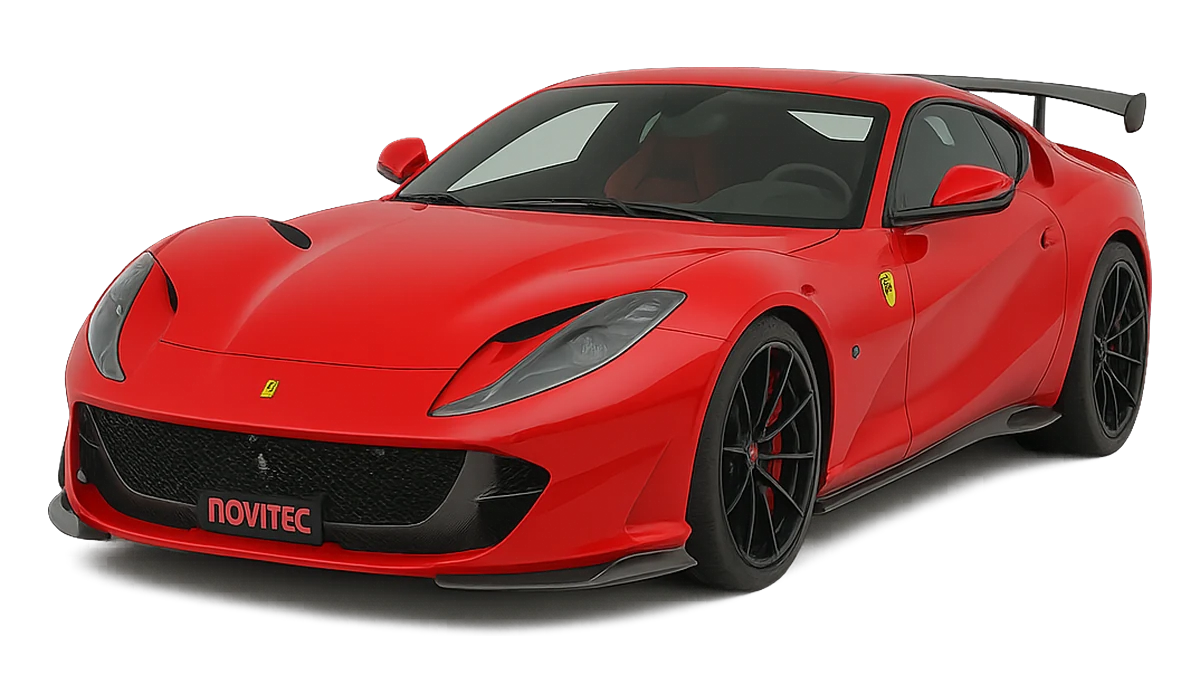
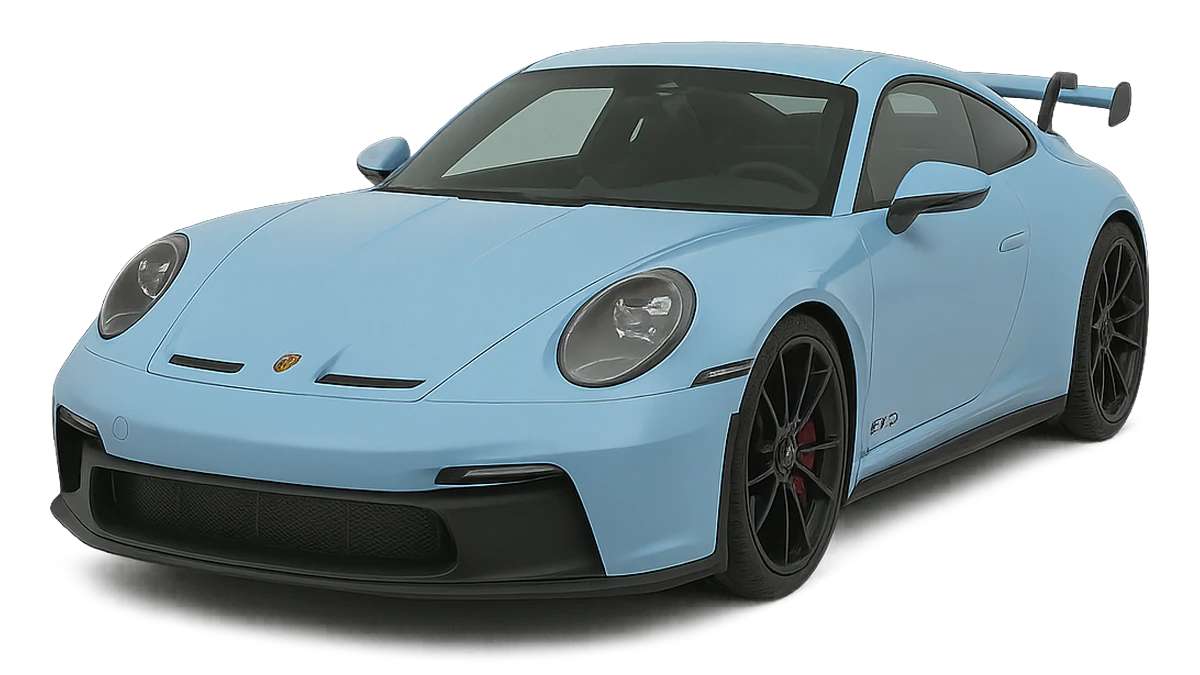
The 5.2-liter V10 in the Audi R8 and Lamborghini Huracán uses a wider 90-degree bank angle and sounds raspier, louder and more exhaust-dominated. The LFA is smoother and more refined in tone, closer to a high, singing note than a snarl. If you want something similar in the app, the 9,000 rpm Porsche 911 GT3 is the closest match for rev speed, while the naturally aspirated V12s share the LFA's continuous, overlapping tone.
A 4.8-liter naturally aspirated V10, code 1LR-GUE, co-developed with Yamaha. It makes 553 hp and revs to 9,000 rpm.
It combines ten evenly firing cylinders, a 9,000 rpm redline and extremely fast rev response, which puts its note higher and cleaner than most road engines. Lexus and Yamaha also tuned the intake and exhaust for sound, including channels that carry intake noise into the cabin.
Lexus quoted about 0.6 seconds from idle to the 9,000 rpm redline. That speed is why the LFA has a digital tachometer instead of a mechanical needle.
This sound is in the app