
V8
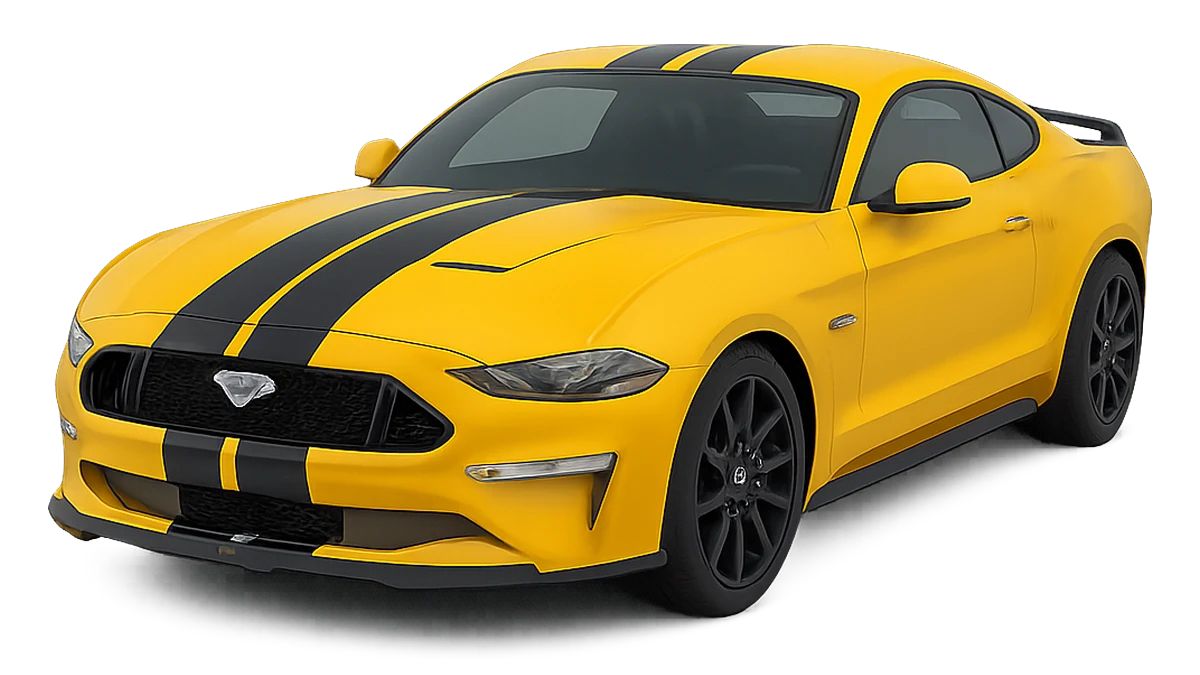
The Ford Mustang GT sounds the way most people expect a Mustang to sound, with a deep, uneven burble at idle that hardens into a loud, rising growl, because its 5.0-liter Coyote V8 uses a cross-plane crankshaft. This page covers the 2018–2023 car, whose third-generation Coyote makes 460 hp and revs to 7,500 rpm, with start, idle, rev and drive recordings from the Car Sounds app.
A cross-plane crank spaces its crankpins 90 degrees apart. That keeps the engine smooth, but it means each bank of four cylinders fires at uneven intervals. The exhaust on each side receives those pulses unevenly, and that irregular rhythm is the lumpy, off-beat sound at idle that defines the classic American V8.
At idle and low rpm that unevenness reads as a lazy wobble you can hear from the tailpipes. Under load the pulses arrive so quickly that they blur together into a thick, continuous growl.
The Coyote is not an old-school pushrod engine. It has four valves per cylinder and dual overhead cams on each bank, and the third-generation version combines port and direct fuel injection. Peak power arrives at 7,000 rpm, and the engine keeps pulling toward its 7,500 rpm limit.
That gives the Mustang GT a wider range of sounds than its big-displacement rivals. The bottom end is all rumble, the midrange adds a harder edge, and near the top you start to hear more intake and valvetrain noise layered over the exhaust. The firing frequency shown above explains why the pitch climbs so noticeably on the way up.
Many 2018–2023 Mustang GTs have Ford's optional active valve performance exhaust, which uses valves to change how loud the car is, with selectable modes ranging from quiet to track. A Good Neighbor Mode can also schedule quiet cold starts for early mornings. That is why two Mustang GTs can sound quite different on a cold start: one with the valves open, one deliberately muted.
The 2018–2023 Mustang GT uses Ford's 5.0-liter Coyote V8, a naturally aspirated, dual-overhead-cam engine with a cross-plane crankshaft that makes 460 hp and revs to 7,500 rpm.
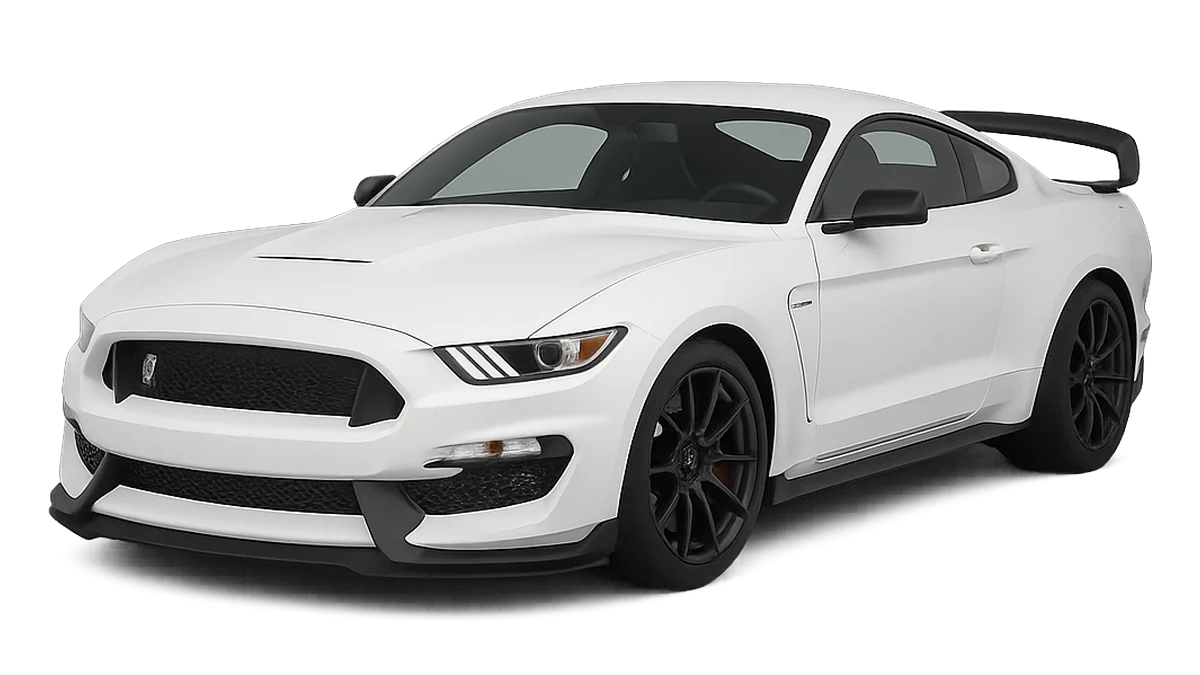
The Mustang GT has a cross-plane crank, which gives the uneven burble of a classic V8. The GT350's 5.2-liter Voodoo uses a flat-plane crank, so it sounds smoother at idle and much raspier at high rpm.
It is a setting available with the active valve exhaust that keeps the exhaust in its quietest mode during a time window you choose, so early-morning starts are not as loud.
This sound is in the app